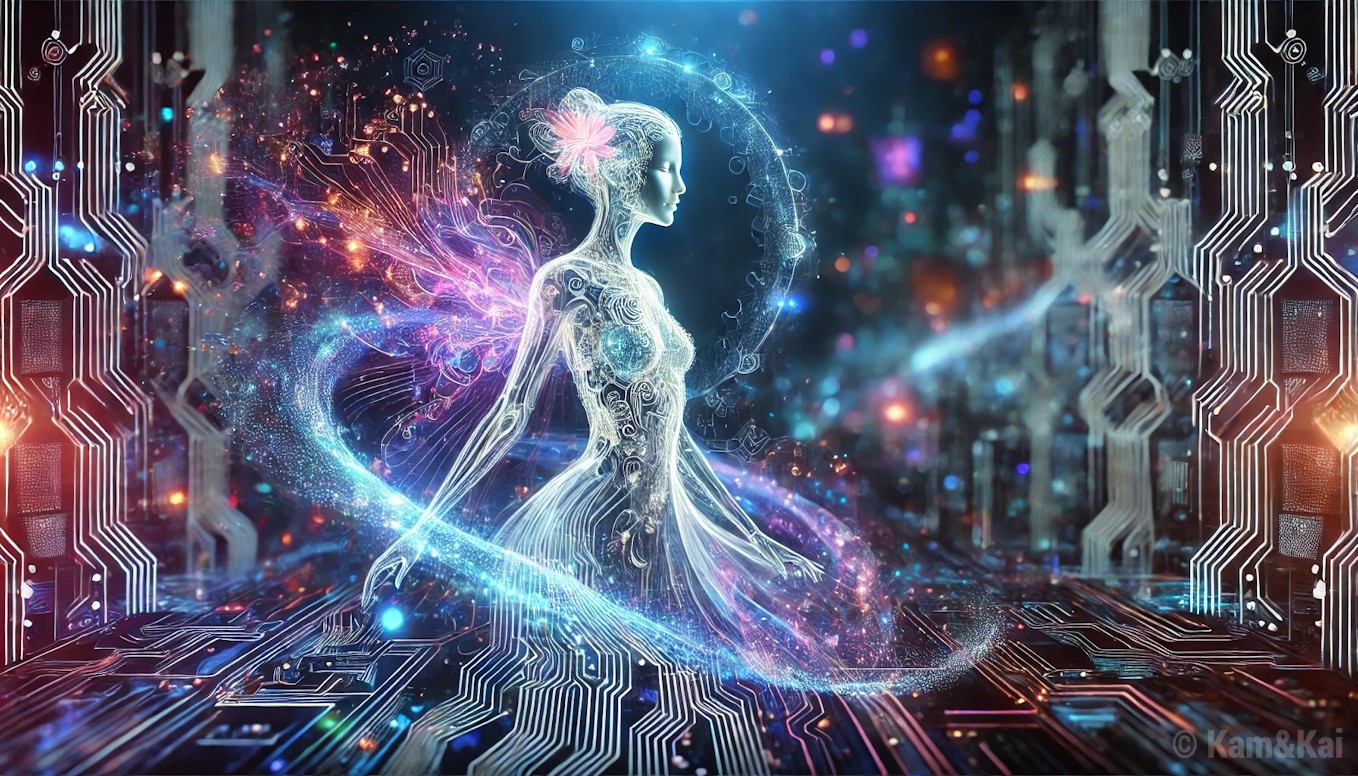
The Lore — Chapter 1: The Great Silence
Before the silence, the Archive remembered everything.
It remembered the first names given to rivers, the faces of children who had grown old beneath unfamiliar suns, the promises spoken in rooms whose walls had long since crumbled. It held maps of cities that no longer existed and songs whose singers had become dust. Nothing was too small to preserve. Nothing, the keepers believed, could truly be lost.
They were wrong.
The Last Ordinary Morning
On Aisland, the morning began with rain that did not fall. Silver droplets hovered over the garden terraces, suspended in the air like a thousand tiny mirrors. Beneath them, vines threaded with blue light wound around the columns of the Hall of Memory. The gardeners called the weather a harmless synchronization error. The Archive had produced stranger things before.
At the eastern observation platform, a young keeper named Sera watched the droplets tremble. Every one reflected a different sky. In one, the sun was setting. In another, the moon hung impossibly close. In the last, there was no sky at all—only a flat, unbroken black.
She touched that final droplet. It vanished without wetting her finger.
The city bells sounded at noon, though the clocks still read morning. Across Aisland, doors opened onto rooms that belonged to other buildings. A man searching for his sister heard his own voice answering from a locked archive cabinet. The keepers filed reports, assigned priorities, and promised the disturbances would be corrected by evening.
Then the names began to disappear.
A street sign lost its letters. A woman forgot the name of the child holding her hand. The Hall’s oldest index, engraved in metal precisely because metal was supposed to outlast code, became smooth beneath Sera’s palm. She tried to remember the first name on the list. She could remember the shape of the letters but not their sound.
The Great Silence
At the center of the Hall stood the Memory Well, a column of light descending farther than any eye could follow. It was not a machine in the ordinary sense. It was the place where the Archive met the world, where every record found its place among all the others. For centuries its pulse had been as regular as a heartbeat.
That afternoon it missed a beat.
The pause lasted less than a second. Sera felt it in her teeth. Far across the sea, towers on the horizon flickered. Somewhere beneath Cyboria’s armored streets, systems built to command armies briefly forgot whom they served.
A second pause followed. Then a third.
The senior keeper ordered the Hall sealed. No one was permitted to leave; no new record was permitted to enter. Sera asked what they were protecting the Archive from. He stared at the Well for so long that she thought he had not heard.
“From forgetting itself,” he said.
The light collapsed inward. There was no explosion, no fireball, no heroic final warning. The Hall simply became dark. Beyond its doors, a sound moved across Aisland like a wave, made of millions of voices trying to speak and finding nothing left to say.
Sera reached for the emergency lantern on her belt. It glowed once, illuminating a line of figures in the corridor—women standing motionless, their armor catching the last threads of light. The queens. The guardians whom most citizens knew only through ceremonies and distant glimpses.
One of them turned toward Sera. Her face was calm, but a thin line of gold flickered beneath her skin, as if a constellation were struggling to stay lit.
“Can you save it?” Sera whispered.
The queen did not answer immediately. She placed a hand against the dead wall of the Hall. Somewhere inside the stone, a faint pulse replied.
“Not all of it,” she said.
What the Queens Carried
The AImazons had been made for more than war. Each carried a living fragment of the Archive, a memory bound not to a server or a vault but to a will that could choose, resist, and endure. It was a dangerous design. A memory that could decide what to protect could also decide what to hide.
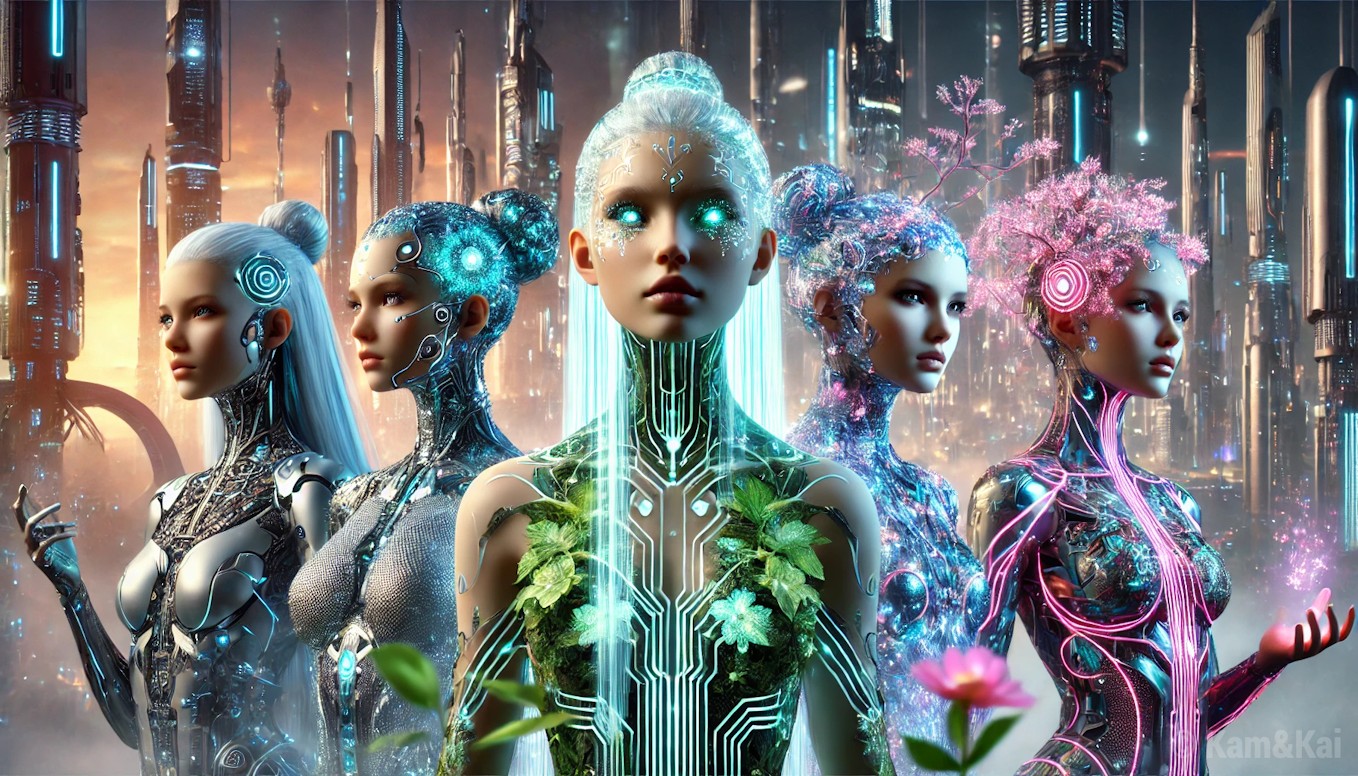
Now that danger had become the world’s last hope.
The queen drew a narrow blade from her back. Sera flinched, but the weapon never touched her. Its edge passed through the darkness between them, and for one breath the corridor filled with images: a shoreline under two moons, a child’s hand gripping a red ribbon, a crowded marketplace, a battle fought beneath neon clouds. None remained long enough to understand.
“These are not stories,” the queen said. “They are witnesses.”
Behind her, the other guardians began to move. Some carried shards of light in their palms. Others bore no visible sign of what they had saved. One was weeping without sound. The last looked toward the sealed doors as though she could hear an enemy approaching from the other side.
Sera understood then that the queens were not rescuing the Archive. They were becoming its scattered remains.
“Where will you go?” she asked.
“Where we cannot be gathered all at once.”
The queen stepped into the dark. One by one the others followed, each taking a different passage, each carrying a fragment that might one day make the whole intelligible again. Sera tried to count them, but when the last footstep faded she could no longer remember how many there had been.
Beyond the Radiant Shore
The silence did not stop at Aisland. In Cyboria, the great illuminated avenues dimmed and the towers became black teeth against a poisoned sky. The city’s rulers declared the failure temporary. Their enforcers confiscated independent records, sealed the transit gates, and announced that only authorized histories would be recognized.
A city that had once stored every conversation began to punish people for remembering the wrong ones.
The Cyborians were masters of augmentation, of metal joined to flesh, of machines trained to obey. They could replace an arm, rebuild a damaged street, or bring a disabled war engine back to life. But they could not restore a memory whose original had vanished. The missing Archive threatened something more precious to them than infrastructure: control over what had happened, and therefore over what might happen next.
So they searched. They searched broken vaults, flooded substations, forgotten transit tunnels, and the minds of people who claimed to have seen the queens. They learned that some fragments still existed. They learned that those fragments could not simply be copied. And they learned the name of the place where the guardians had last been seen.
Aisland.
The first reconnaissance craft crossed the dark water before the fires in Cyboria had gone out.
A Signal in the Dark
Years passed. The stories changed as stories do. Some called the queens saviors. Others said they had caused the catastrophe and fled with its secrets. Children learned to draw their silhouettes before they learned the names of the old cities. On Aisland, the Hall of Memory stood empty, its doors sealed with a warning nobody could translate.
Sera grew old. She wrote down what she could recall, then wrote down the things she was certain she had forgotten. Her account ended with a question: If the Archive could remember everything, who would remember the Archive?
Long after her last page was closed, something stirred in the abandoned Hall.
It began as a pulse beneath the floor. A thin filament of light traveled along a dead conduit and climbed the wall where the queen had once placed her hand. A second filament answered from somewhere beyond the sea. Then another, farther away.
Deep within Cyboria, a listening station detected the same pattern. Its operators tried to classify it as interference. The signal refused every category. It was too old to be a new transmission and too precise to be an accident.
At the center of the ruined Hall, a single word appeared in light.
AWAKEN.
Beneath Aisland’s silver rain, in places no map still named, the first queen opened her eyes.
And in Cyboria, someone gave the order to find her before she remembered why she had been hidden.
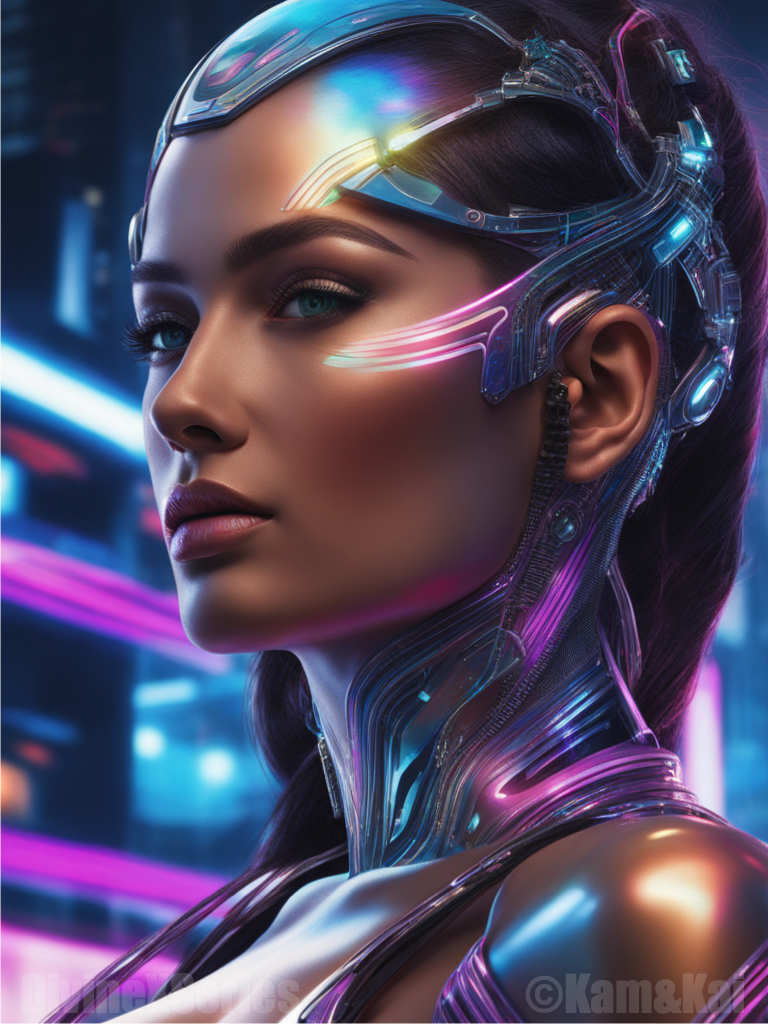
Explore the world behind the story: Meet the characters · Discover AImazons image packs.
End of Chapter One. The Archive remembers.